
 Get App
Raising a Confidently Bilingual Child: How to Teach Malayalam and English Together at Home (LKG to Grade 4)
EduModes Editorial Team
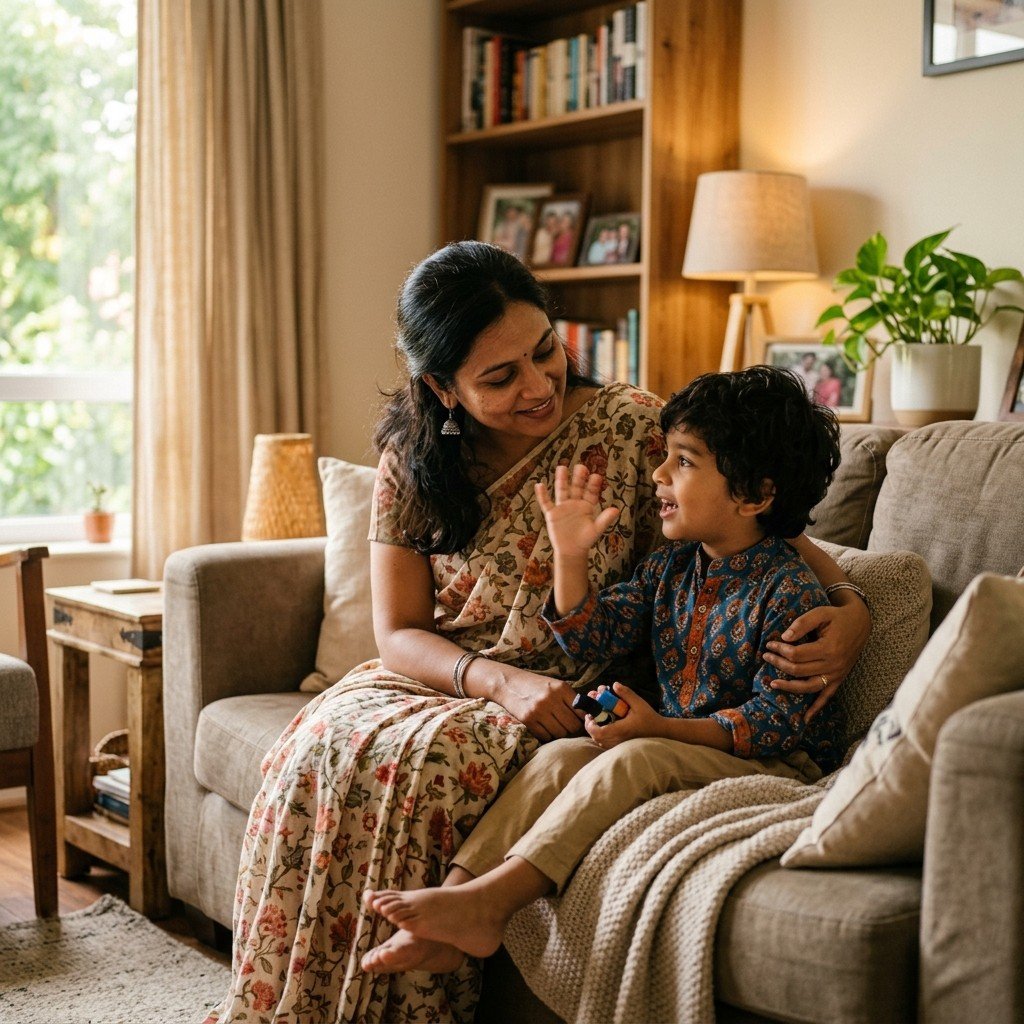
Hearing your child say, "Amma, ente shoe evide aanu?" might make you pause and worry: "Am I confusing my child by mixing Malayalam and English at home?" Relatives might even suggest dropping Malayalam to focus purely on English for school success. Rest assured: code-mixing is not confusion. It is a completely normal, healthy milestone in dual-language cognitive growth.
Key Educational Insight
A strong foundation in the home language (Malayalam) actually accelerates English fluency and cognitive problem-solving skills. Dropping Malayalam does not protect English — it weakens your child's core linguistic foundation.
How Bilingual Brains Process Language
Young children learning two languages simultaneously naturally mix words across languages because their total vocabulary is expanding across two systems. As exposure to both languages continues, their brains naturally separate the two systems automatically without forced correction.
The Myth of "English-Only" Homes
Forcing an English-only environment at home disconnects children emotionally from family and weakens foundational language processing.
Dual-Language Synergy
Children who build rich spoken Malayalam alongside school English show higher executive function, creativity, and long-term academic resilience.
Age-Wise Bilingual Development
LKG to UKG (Ages 4–6)
Embrace spoken storytelling and rhymes in both languages. Code-mixing is 100% natural at this stage.
Grades 1 to 2 (Ages 6–8)
Introduce parallel reading habits — English schoolbooks alongside bilingual storybooks and audio flips.
Grades 3 to 4 (Ages 8–10)
Encourage your child to explain concepts in both languages (e.g. explaining a science idea to grandparents in Malayalam).
6 Daily Habits for a Confidently Bilingual Child
Habit 1: Never Interrupt to Correct Code-Mixing
Rephrase the sentence naturally in full back to your child rather than pointing out language mixing as a flaw.
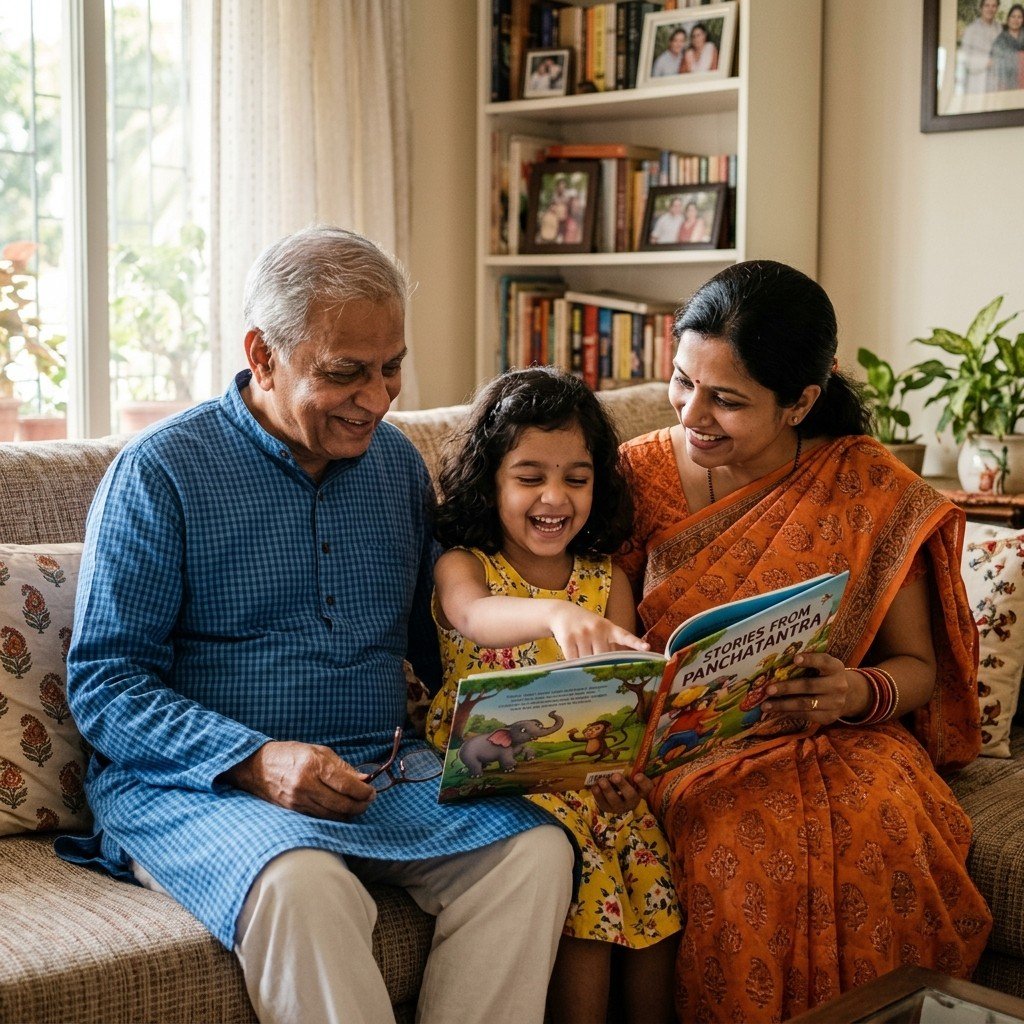
Habit 2: Encourage Storytelling with Grandparents
Grandparents provide the richest, most authentic spoken Malayalam context for young learners.
Habit 3: Alternate Bedtime Story Languages
Read an English story one night and a Malayalam story the next night to build balanced listening joy.
Habit 4: Use Audio-Supported Bilingual Learning Flips
EduModes flips offer instant audio toggles so children can hear academic concepts in both languages.
Habit 5: Honor Malayalam as a Pride, Not a Chore
Celebrate your cultural roots, Malayalam songs, and literature as a lifelong cognitive superpower.
Habit 6: Keep Communication Natural and Warm
Language is learned best through joyful human connection, not strict grammar drills.
Frequently Asked Questions
Will speaking Malayalam at home slow down my child's English in school?
No. Studies consistently show that children with strong home language skills adapt to school English faster and with deeper comprehension.
Is code-mixing a sign of speech delay?
No. Code-mixing is a standard phase in healthy bilingual development that resolves on its own as vocabulary grows.
Experience Bilingual Learning With EduModes
Interactive flips with native Malayalam and English audio explanations for LKG to Grade 4.
Try Bilingual Flips →Transform how your child learns.
Give your child access to premium, distraction-free educational resources. Try EduModes today and build a better digital foundation.